
Location, Product Mix, Capacity and Route Operations: A Practical Framework for Vending Operators
This summer, The Odyssey has put the idea of “the journey” back into the cultural conversation.
For vending operators, the journey looks very different — but the principle still applies:
The decisions made along the way shape the outcome.
Buying a vending machine may feel like the beginning of the business.
In reality, it is only one step.
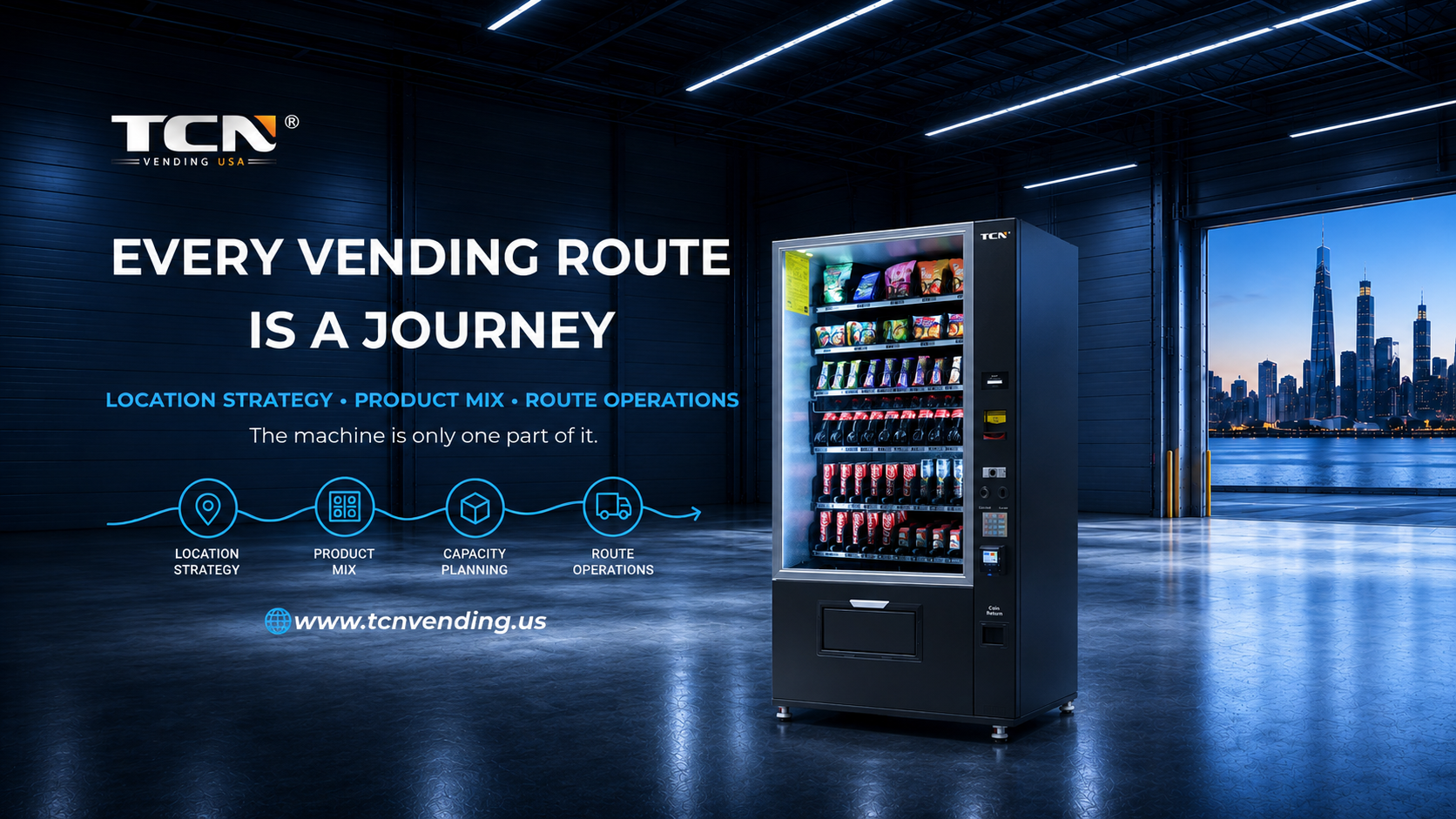
A successful vending route depends on a connected set of decisions: choosing the right location, understanding traffic patterns, building the right product mix, sizing capacity, planning restocking, maintaining uptime and knowing when to scale.
The machine matters.
But the operation around the machine matters just as much.
1. Start With the Location, Not the Equipment
One of the easiest mistakes in vending is choosing a machine first and then trying to make the location fit it.
A stronger approach works in the opposite direction.
Start with the location.
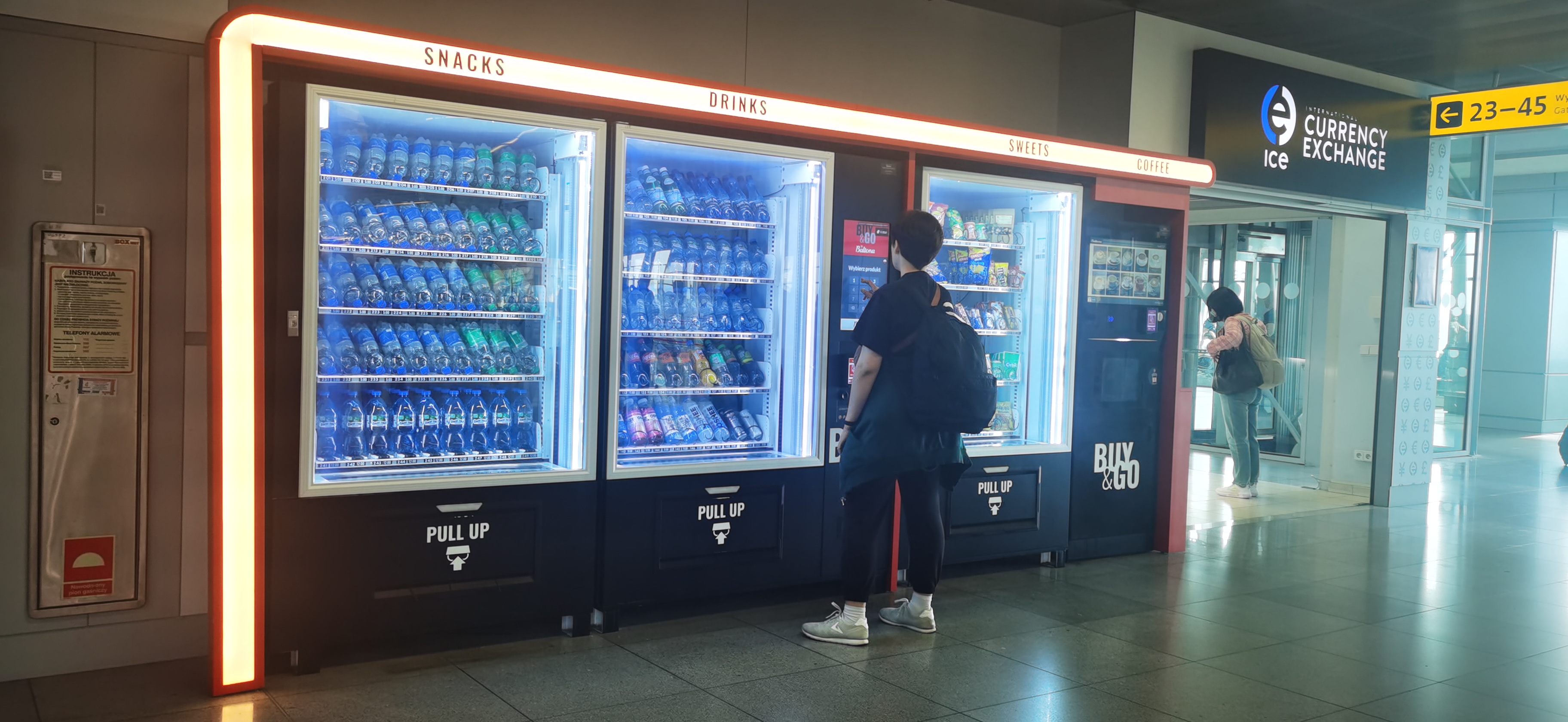
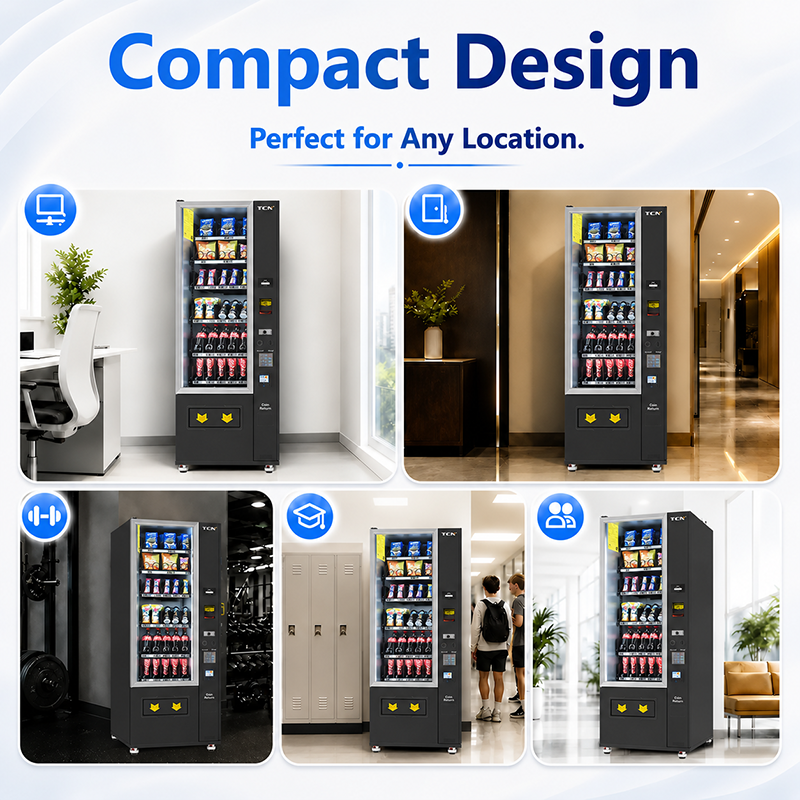
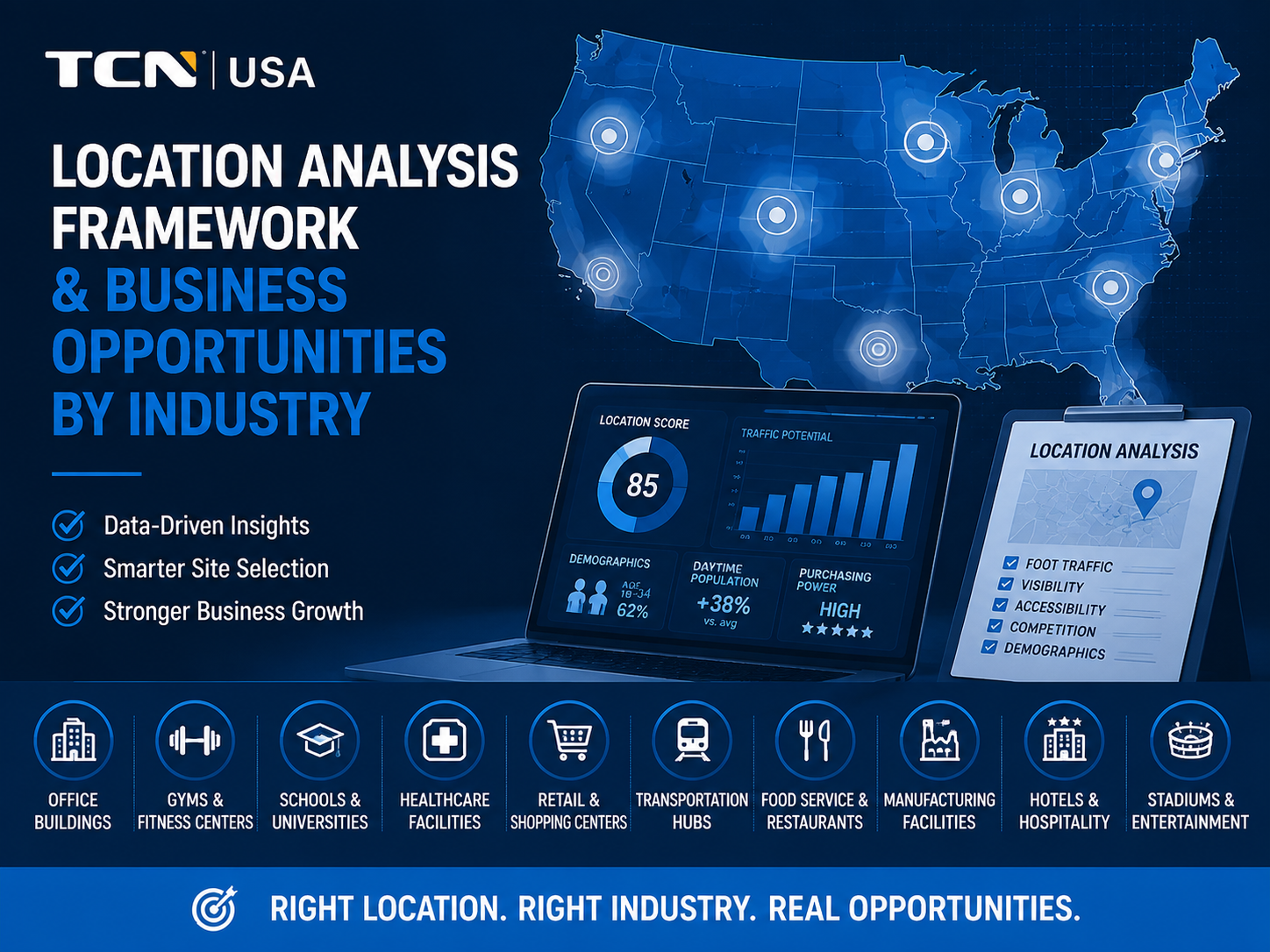
A corporate office with steady weekday traffic behaves differently from a manufacturing facility operating multiple shifts.
A university student center may experience sharp traffic peaks between classes.
A gym may generate more demand for cold beverages and protein products than for a traditional snack-heavy assortment.
Before choosing equipment, understand five things:
Traffic
How many people use the location, and when is it busiest?
Dwell Time
Are people passing through quickly, or staying for longer periods?
Product Demand
What are they actually likely to buy?
Available Space
How much footprint can the location realistically support?
Service Frequency
How often can the route be restocked and maintained?
Once those variables are clear, the equipment decision becomes much easier.
The better question is not:
“Which machine has the most features?”
It is:
“Which machine fits the way this location operates?”
2. Capacity Is an Operating Decision
Bigger is not automatically better.
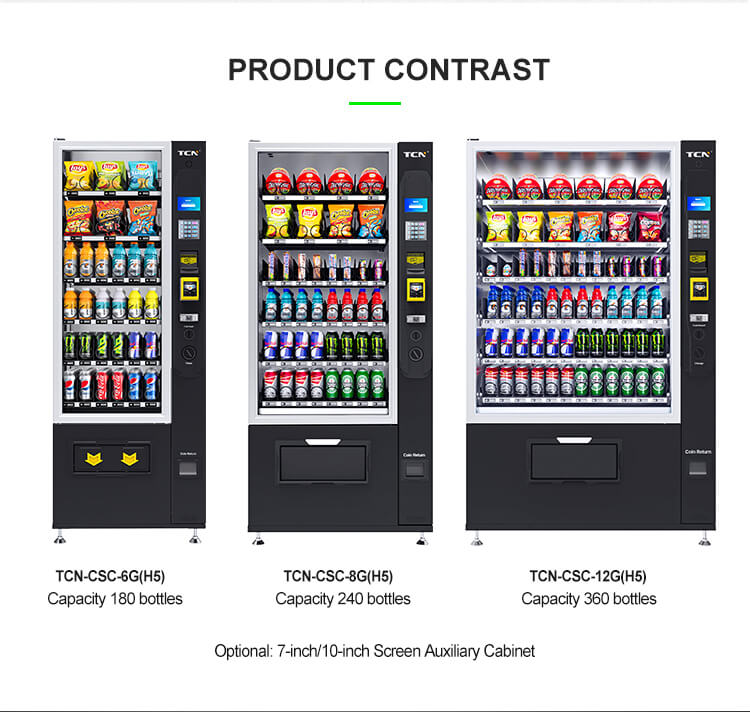
More capacity and more selections can be valuable — but only when the location can support them.
For a smaller office, footprint may matter more than maximum inventory.
For a busy factory, campus location or high-volume breakroom, running out of popular products too early may create a very different problem.
That is why capacity should not be treated as just another specification.
Capacity affects route operations.
If high-demand products repeatedly sell out before the next scheduled visit, the operator may need to adjust:
-
machine capacity,
-
product allocation,
-
restocking frequency,
-
or the number of machines serving the location.
At the same time, oversized equipment in a low-demand location can create underused inventory space.
The goal is not to buy the biggest machine.
It is to right-size the location.
3. Product Mix Shapes the Equipment Choice
Traffic is only part of the decision.
What you plan to sell matters just as much.
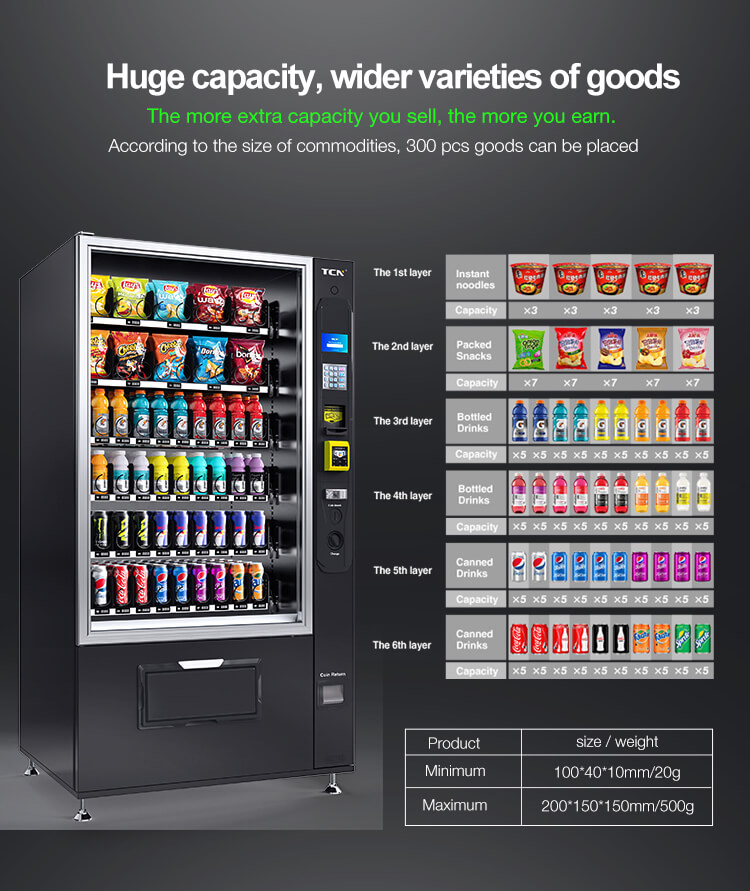
A conventional snack-and-drink location may work well with refrigerated combo vending.
A location carrying a wider range of bottles, cans and box-packed merchandise may need more flexibility in product configuration.
For example, the TCN-CSC-10C(V22) combines flexible packaged-product vending with a large digital display. Beyond the transaction itself, that screen can support product promotions, location messaging and — where the commercial model allows — paid advertising as a small secondary revenue opportunity.
A smart-cooler format serves a different purpose.
The TCN-CFZ-530-V, for example, uses an open-shelf grab-and-go format that can support beverages, packaged snacks, fruit and other products appropriate for the machine's actual temperature range.
The important point is not the model name.
It is the decision sequence:
What do you want to sell?
Then:
What retail format supports that product mix?
That shift turns equipment-first thinking into business-first thinking.
4. Restocking Is Where the Route Becomes Real
A location can look excellent on paper.
Then the route starts operating.
That is when practical questions begin to matter:
How far is the location from the rest of the route?
Which products sell fastest?
How often does the machine actually need service?
How long does each replenishment visit take?
How does one additional stop affect the rest of the day?
A vending machine does not operate in isolation.
It is part of a larger system involving inventory, labor, vehicles, maintenance and time.
This is where telemetry and remote machine data can become useful.
Sales data, inventory visibility and machine-status alerts can help operators make better decisions about which locations need attention first and what inventory should be prepared before the route vehicle leaves.
Technology does not remove the need for route service.
It helps make that service more informed.
5. Uptime Is a Route Issue, Not Just a Machine Issue
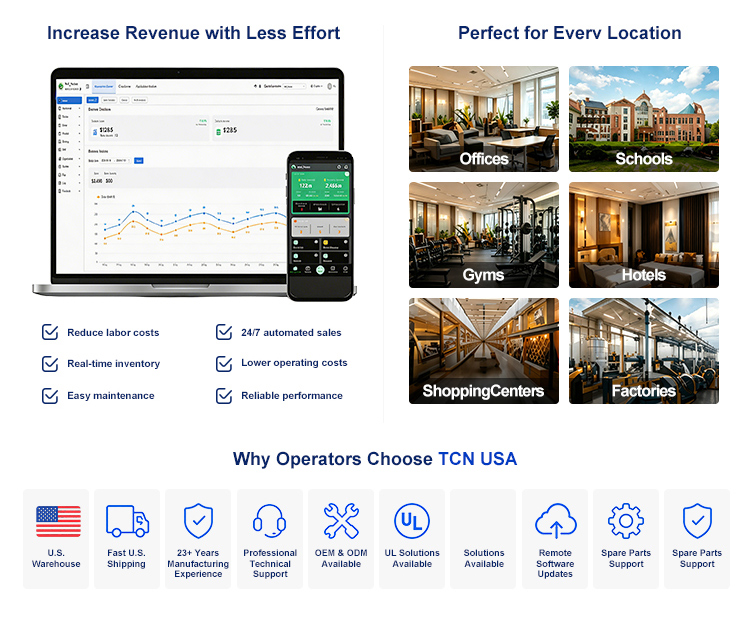
When a machine goes offline, the impact extends beyond one lost transaction.
A service visit may need to be added to the schedule.
The location manager may need assistance.
Customers temporarily lose access to the service.
And an unscheduled stop can affect the rest of the route.
That is why experienced operators also consider:
Delivery detection
Can the system provide feedback on whether a product physically passed through the delivery area?
Payment compatibility
Can commonly used cashless and vending-management systems be integrated with the selected configuration?
Service access
How practical is routine maintenance?
Parts availability
How quickly can common replacement components be accessed?
Local support
Who helps when the operator needs technical assistance?
For U.S. operators, this last point is especially important.
TCN Vending Machine USA supports the market through local sales, operations, technical service, maintenance and after-sales resources, together with regional warehouse hubs in New York, New Jersey, California, Georgia and Texas.
A machine may be manufactured globally.
The operating relationship still needs to work locally.
6. Growth Requires a Repeatable Decision Framework
The first successful location is exciting.
A larger fleet requires a system.
As routes grow, the question becomes less about one machine and more about whether the decision process can be repeated.
A simple framework is:
LOCATION
Who uses the site and how does traffic behave?
↓
PRODUCT MIX
What does the location actually need?
↓
CAPACITY & FORMAT
How much inventory and what retail format make sense?
↓
SERVICE LOGISTICS
How often can the location realistically be visited?
↓
HARDWARE & SUPPORT
What technology, payment and service resources support the operation?
↓
THEN CHOOSE THE MACHINE
A scalable vending route does not mean putting the exact same machine everywhere.
It means applying the same decision logic everywhere.
The Machine Is Only One Part of the Journey
Vending is sometimes reduced to a simple formula:
Buy a machine.
Find a location.
Stock products.
Collect revenue.
Real operations are more complex.
Strong routes are built by understanding how equipment fits into a larger system of locations, customers, inventory, logistics, maintenance and service.
So before choosing a machine, ask:
Where will it go?
Who will use it?
When is the location busiest?
What will it sell?
How often can it be serviced?
Only then should the equipment decision begin.
Because every vending route is a journey.
The machine matters. But it is only one part of getting the route where you want it to go.
🏢 About TCN USA
TCN USA Vending Machine is built to serve the U.S. market locally — not simply ship machines into it.
Founded in 2003, TCN develops intelligent vending machines, AI-enabled unattended retail solutions, and connected vending technology for operators around the world.
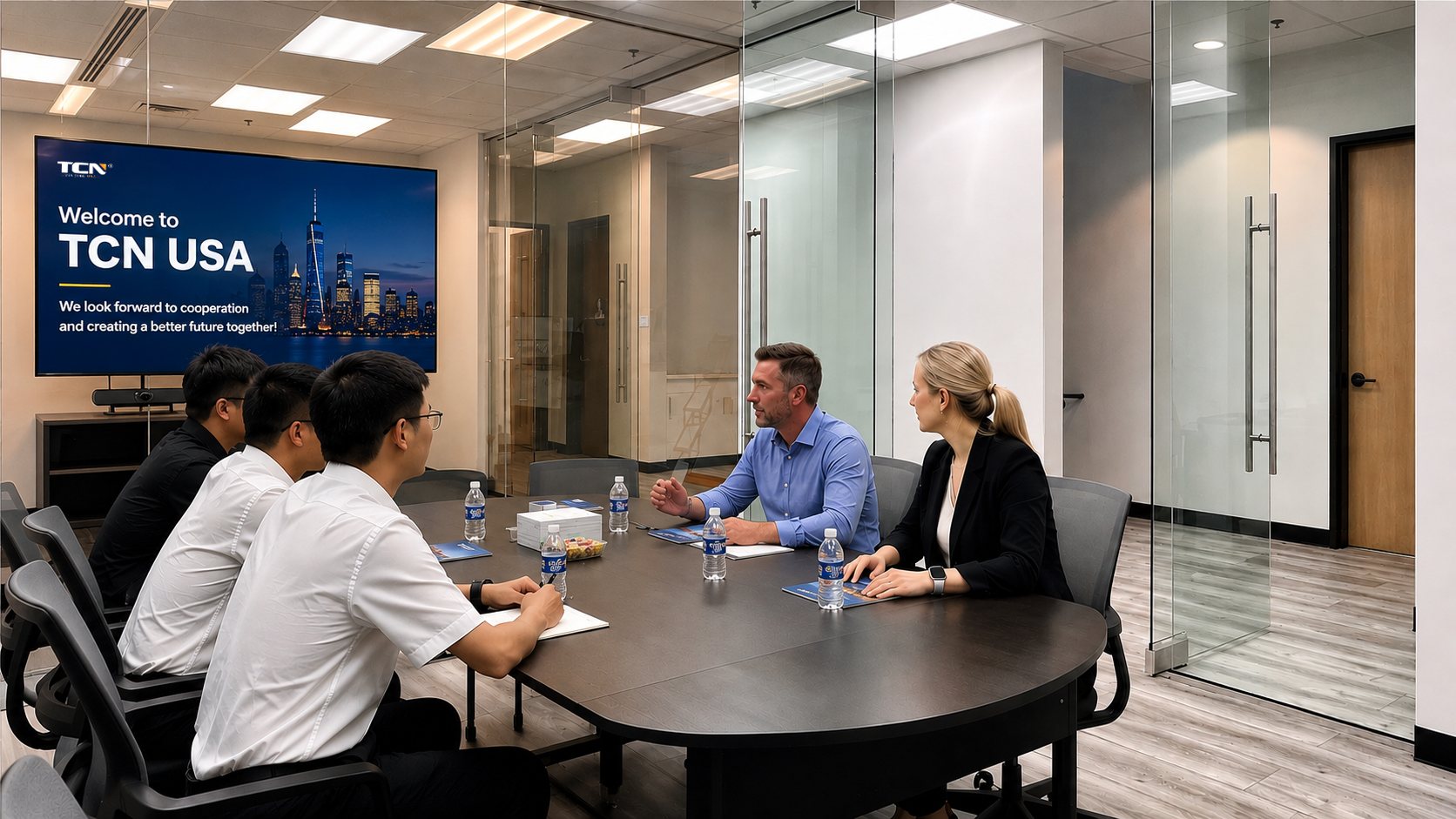
In the United States, TCN USA combines global manufacturing capabilities with a local U.S.-based sales, operations, technical service, maintenance, and after-sales support team.
That means U.S. operators work with local people throughout the equipment lifecycle — from initial machine selection and sales consultation to deployment support, technical service, maintenance coordination, replacement parts, and after-sales assistance.
Our U.S. presence also includes five regional warehouse hubs across New York, New Jersey, California, Georgia, and Texas, helping provide domestic machine inventory and more convenient access to replacement parts for customers across the country.
Local U.S. Support Across the Equipment Lifecycle
Sales & Equipment Consultation
U.S.-based sales support helps operators evaluate equipment based on location, traffic, product mix, and operating requirements.
Operations Support
Our local team works with customers through equipment deployment and ongoing operational needs.
Technical Service & Maintenance
U.S.-based technical and service resources support troubleshooting, maintenance, and machine operation.
After-Sales Support
Customers have access to local assistance after delivery instead of relying solely on overseas communication.
Domestic Inventory & Parts
Five U.S. regional warehouse hubs support local machine inventory and replacement-parts availability.
For vending operators, distributors, and unattended-retail businesses, that local infrastructure matters.
Because buying the machine is only the beginning of the relationship.
TCN USA is focused on supporting what comes next:
Deployment. Operations. Service. Maintenance. Growth.
🌐 Website: www.tcnvending.us
✉️ Sales: sales@tcnvending.us
📍 U.S. Regional Hubs: New York | New Jersey | California | Georgia | Texas


