

Introduction
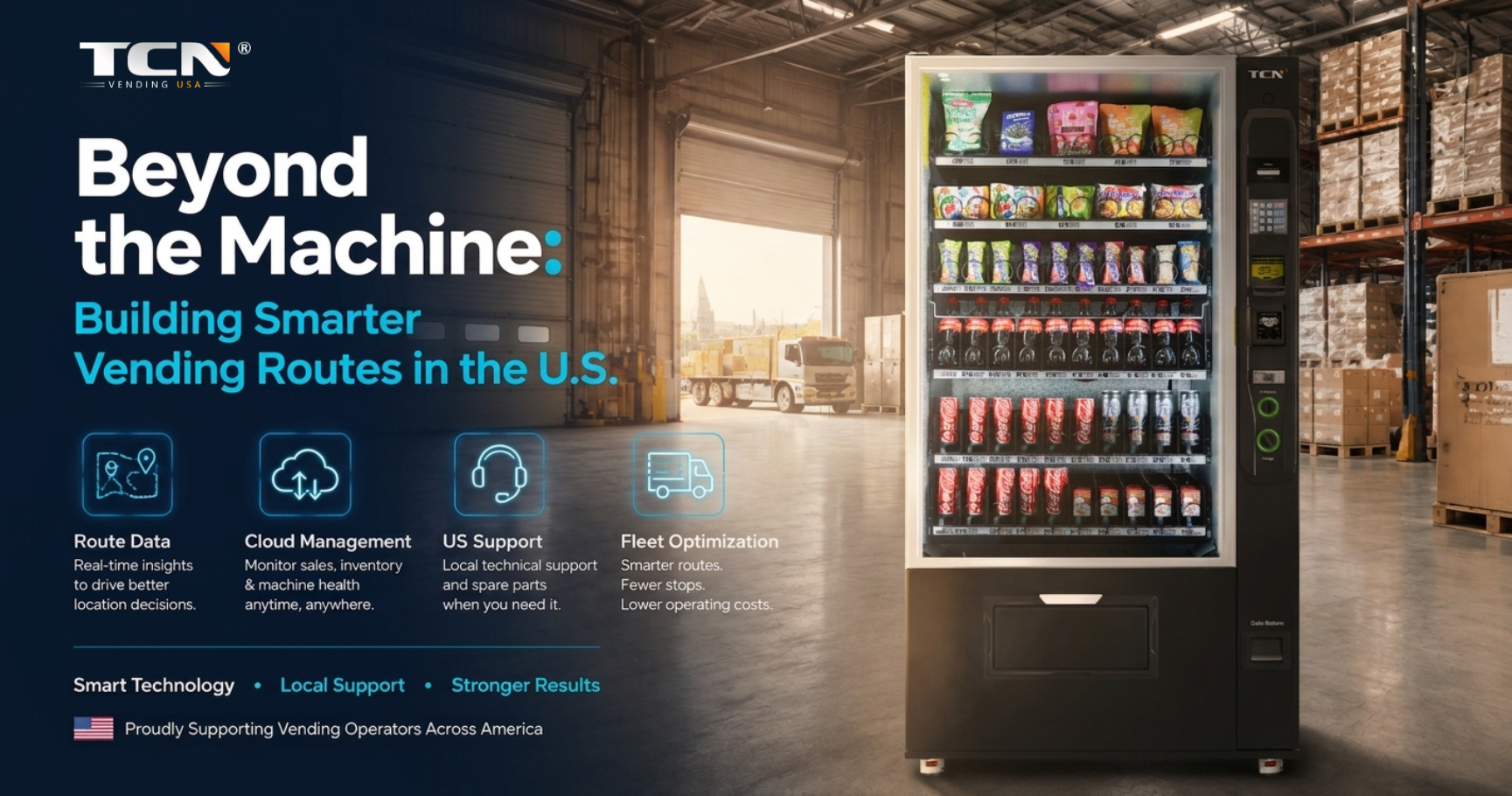
Building a successful vending operation in the U.S. market is not only about choosing the right machine.
The most profitable operators usually make three critical decisions before a machine is even installed:
1. Where the machine should be placed
2. What products should be offered
3. How efficiently the route can be managed
A vending machine is a retail business asset. Its long-term performance depends on location quality, merchandising decisions, operational efficiency, and reliable technology support.
1. Choosing the Right Location: Why Dwell Time Matters More Than Foot Traffic
High foot traffic does not always equal high sales.
Successful vending placement decisions consider:
- Customer dwell time
- Purchasing opportunities
- Food and beverage availability nearby
- Operating hours
- Consumer convenience needs
High-potential vending environments include corporate offices, manufacturing facilities, universities, student housing, and residential buildings.
The best vending locations are not always the busiest places. They are the places where customers have time, demand, and limited alternatives.
2. Understanding U.S. Location Agreements
Common vending placement structures include:
Employee Amenity Agreements:
Used in offices, manufacturing plants, and distribution centers where vending improves workplace convenience.
Revenue Share Agreements:
Common in public-facing locations where operators negotiate commission structures.
Institutional Contracts:
Used by universities, healthcare facilities, and transportation hubs through formal vendor selection processes.
3. Smart Merchandising: The Right Products for the Right Environment
A profitable vending route depends on more than machine placement.
Traditional snack and beverage categories remain important because they provide high-frequency purchases and low spoilage risk.
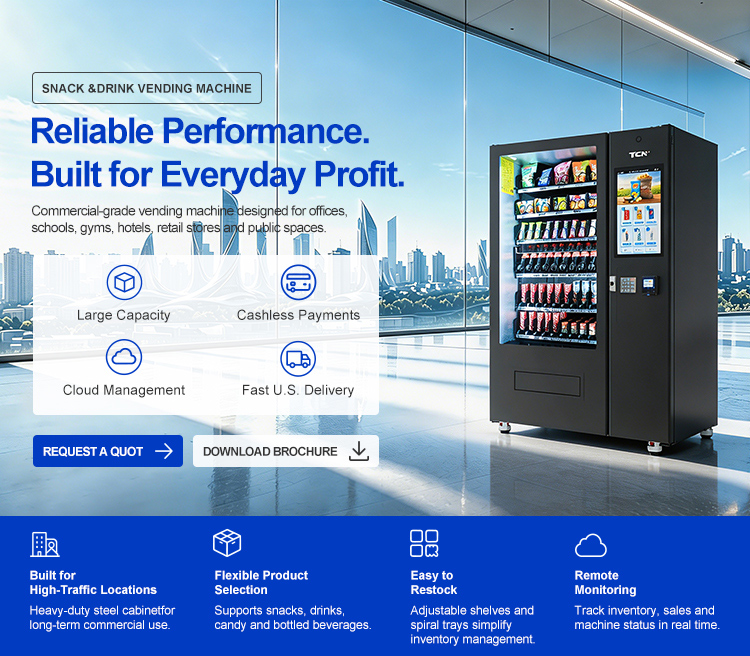
Modern smart vending technology enables additional categories including charging cables, electronics accessories, personal care products, stationery, and convenience items.
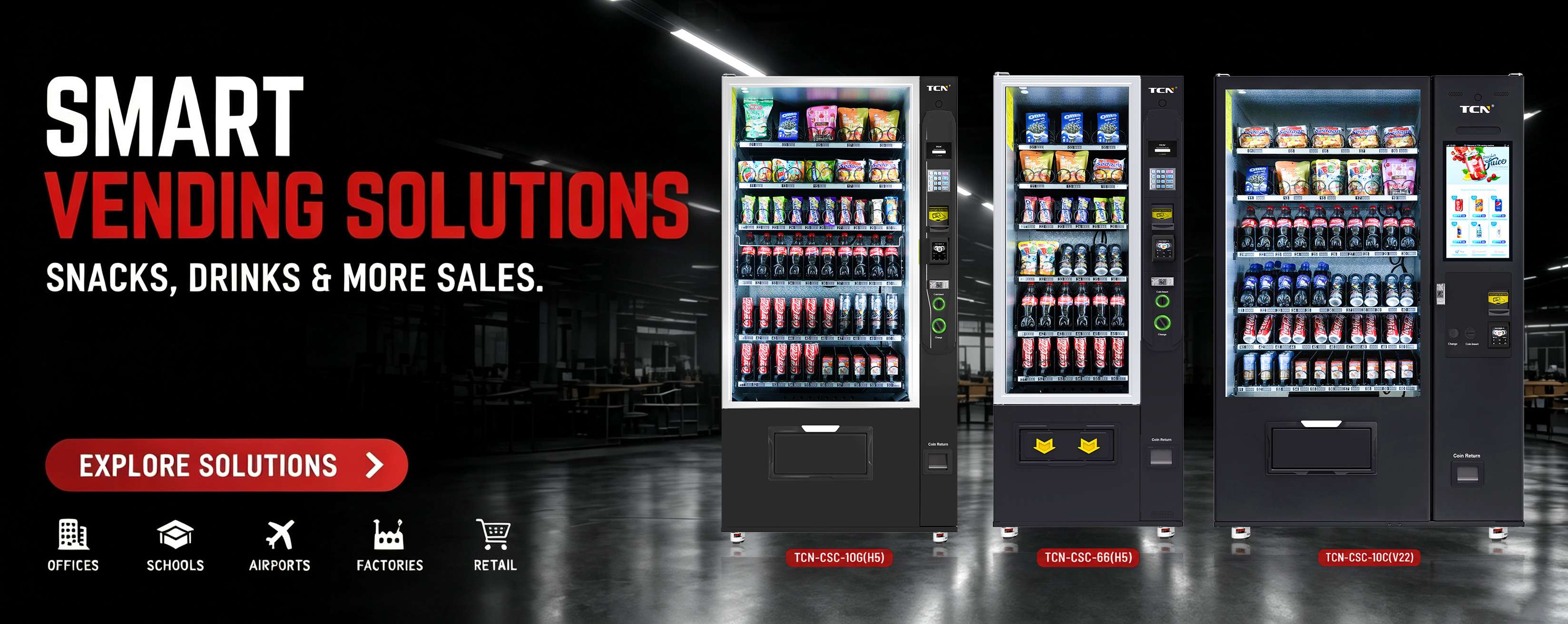
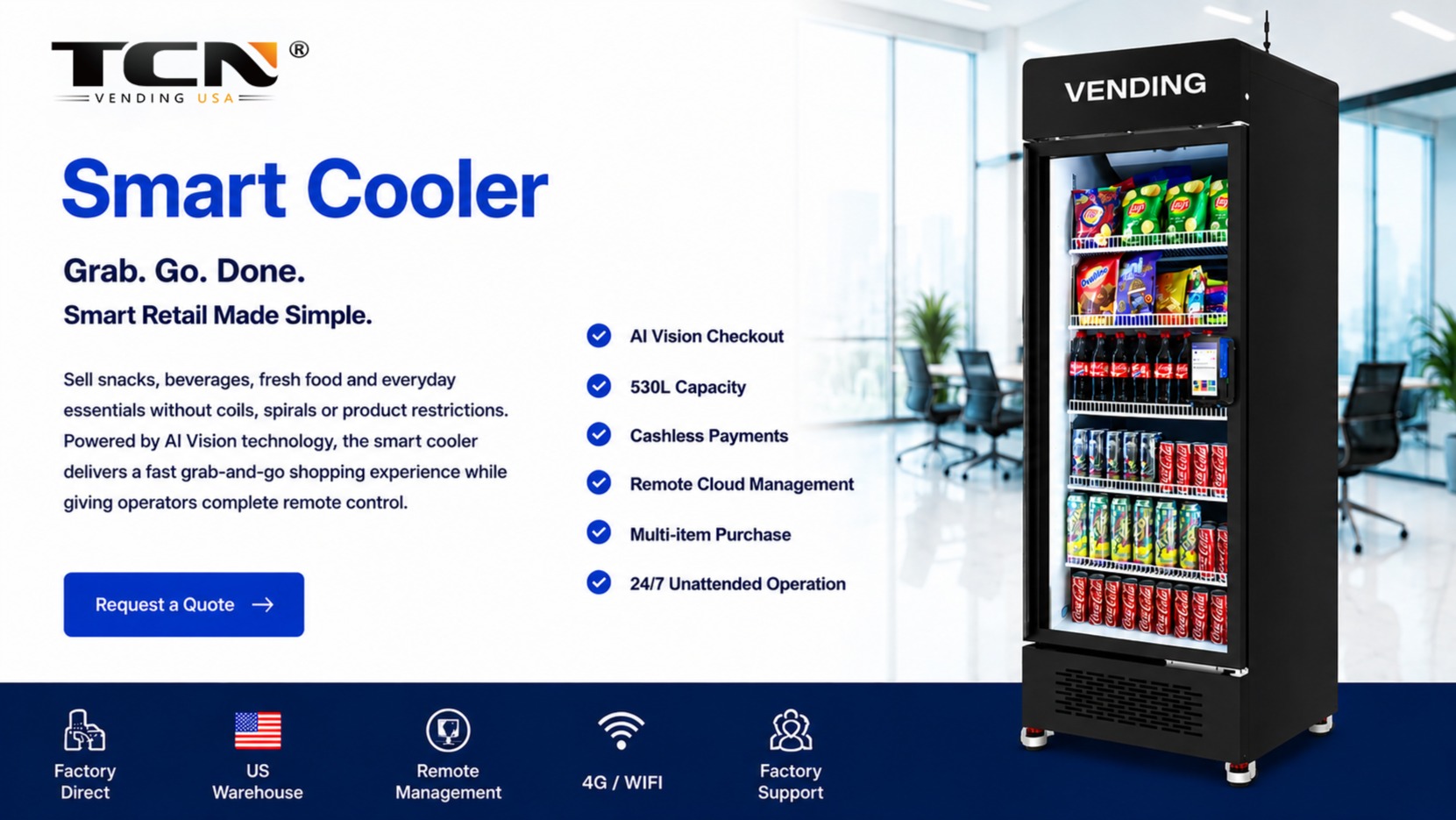
Touchscreen vending solutions such as TCN-CSC-10C(V22) allow operators to explore new retail opportunities.
4. Route Optimization: Turning Data Into Lower Operating Costs
Traditional servicing methods rely on fixed schedules and can increase fuel costs, driver hours, and unnecessary service visits.
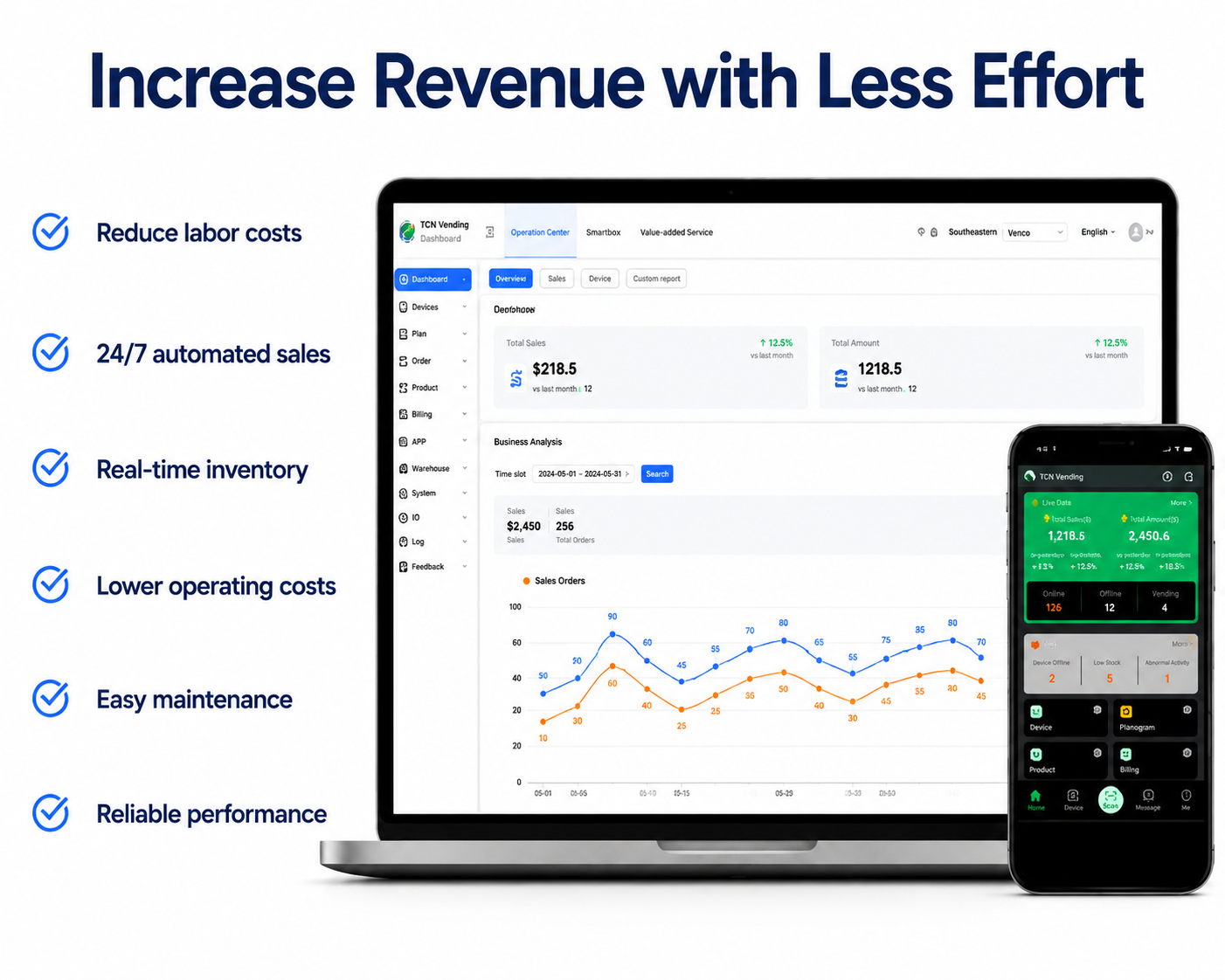
Through the TCN SaaS Cloud Management System, operators can monitor:
- Sales performance
- Inventory levels
- Temperature status
- Payment activity
- Machine alerts
Data-driven route planning helps operators pre-kit inventory, reduce unnecessary stops, and improve fleet profitability.
5. Why Supply Chain Support Matters for Growing Vending Fleets
Equipment availability and after-sales support directly impact fleet expansion.
TCN USA Vending supports North American operators through:
Reliable vending hardware:
- Touchscreen vending solutions
Hardware compatibility:
- MDB
- DEX
- Cashless payment systems
- U.S.-based business operations
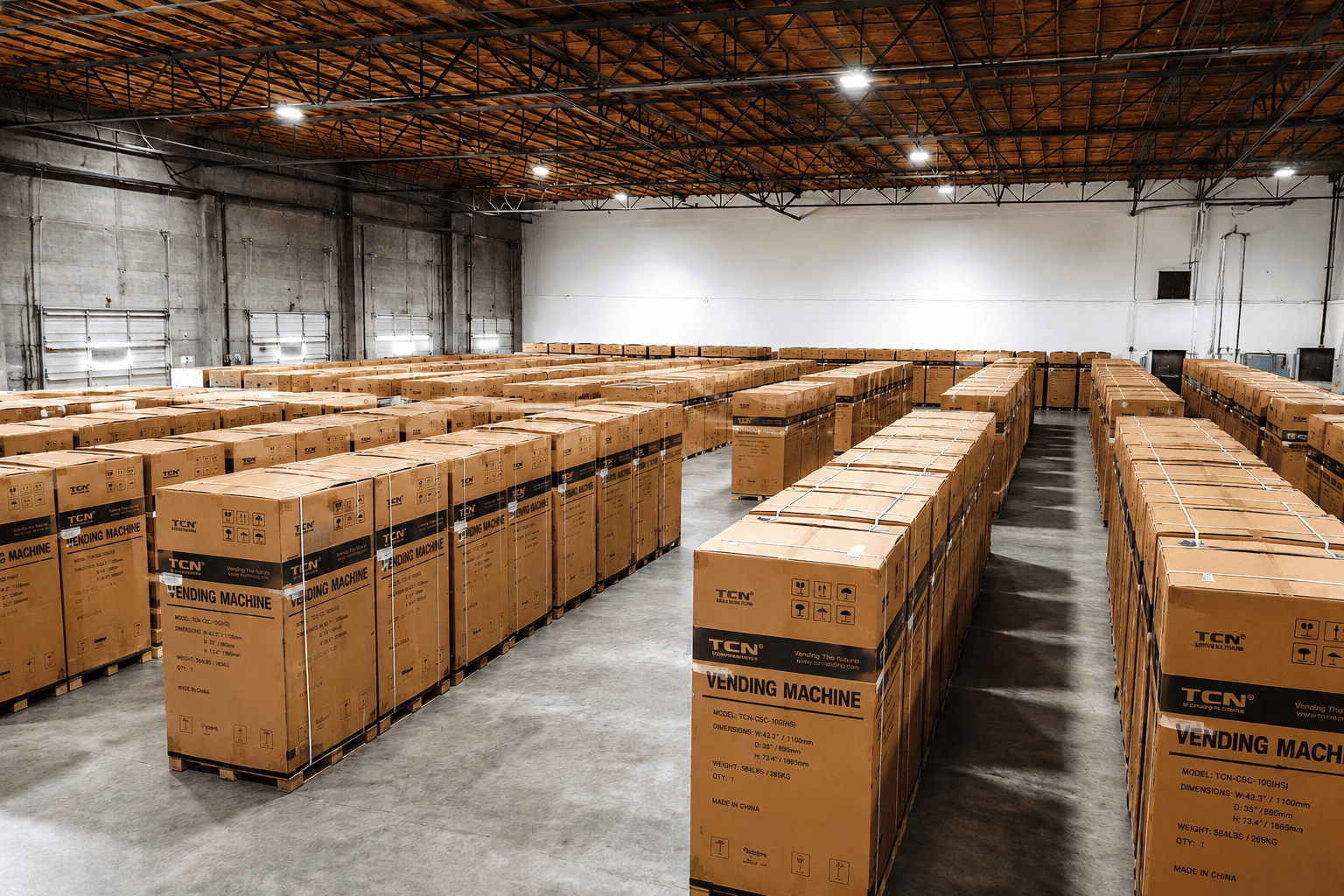
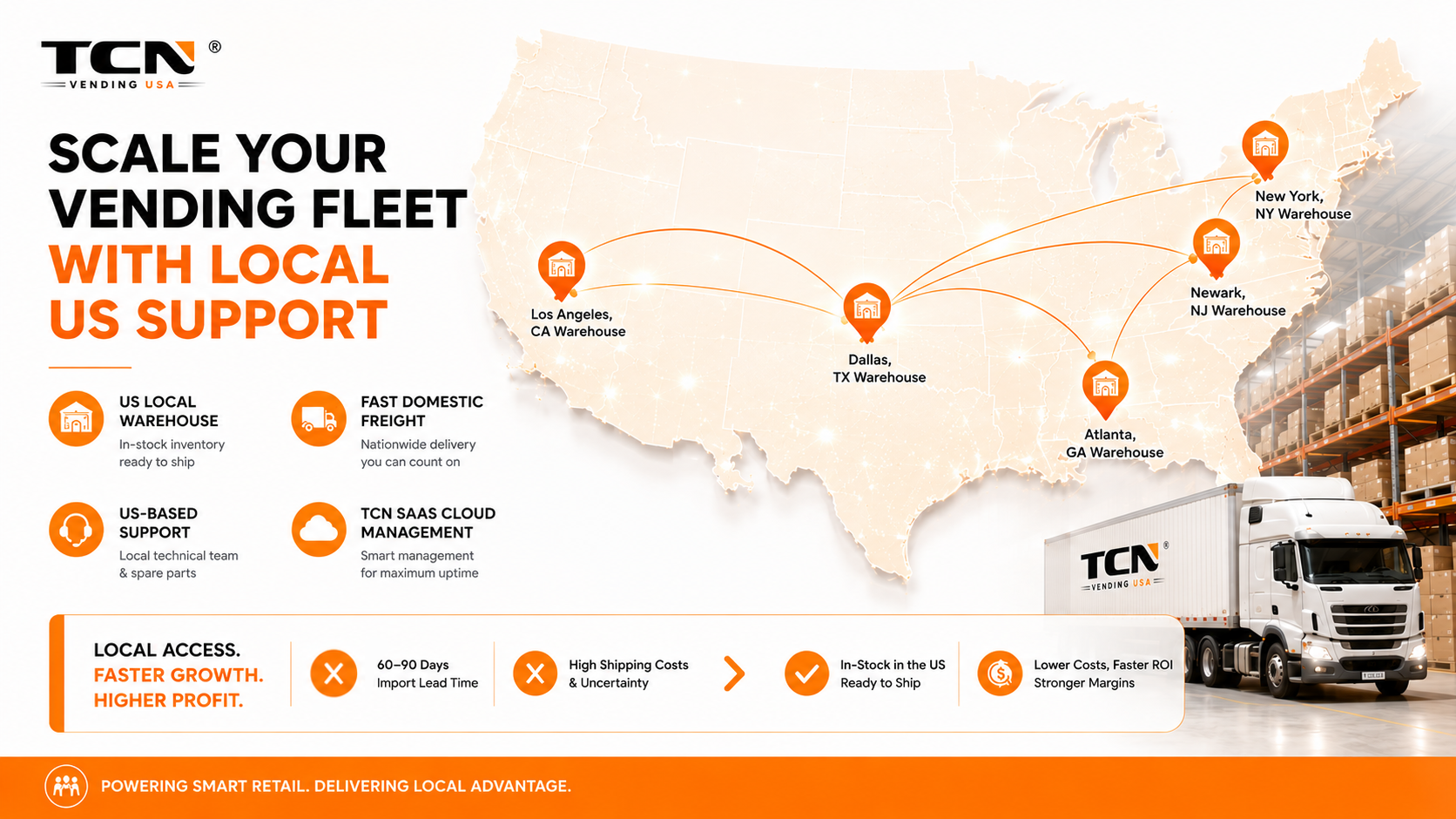
- Local inventory support
- Faster domestic delivery
- Spare parts accessibility.
Final Thoughts: The Future of U.S. Automated Retail
The future of vending is not only about machines.
Successful operators combine:
- Better locations
- Smarter merchandising
- Data-driven fleet management
- Reliable equipment support
TCN USA continues working with vending professionals to support the next generation of unattended retail solutions.
Deployment. Operations. Service. Maintenance. Growth.
🌐 Website: www.tcnvending.us
✉️ Sales: sales@tcnvending.us
📍 U.S. Regional Hubs: New York | New Jersey | California | Georgia | Texas


